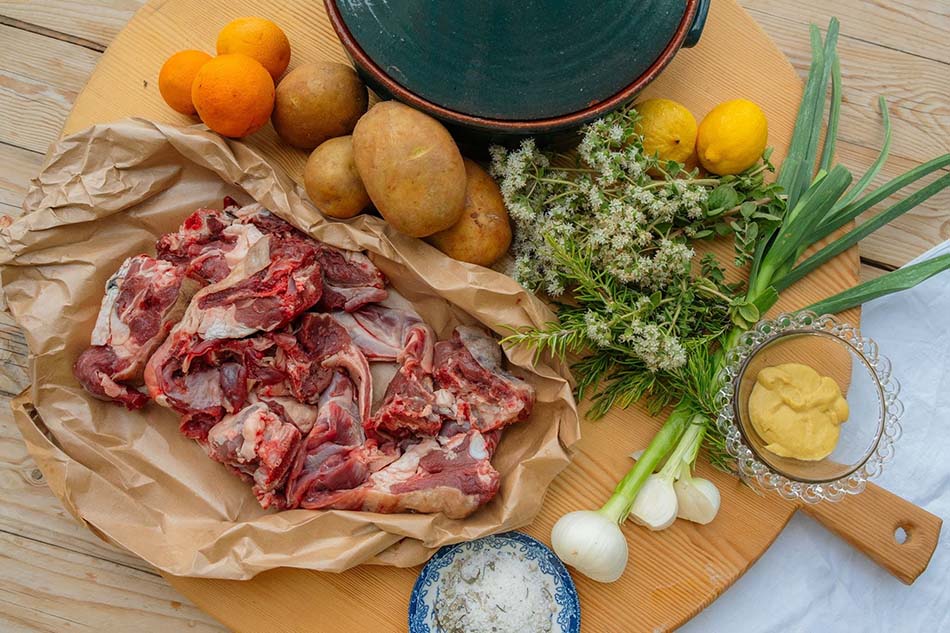
• 2–3 kg goat leg or shoulder, preferably bone-in
• 2 large lemons, juiced
• 1 medium orange, juiced
• 6–8 garlic cloves, sliced or roughly chopped
• 2 tablespoons Dijon mustard
• 3–4 sprigs fresh rosemary, leaves removed and chopped
• 2–3 sprigs fresh oregano, leaves removed and chopped
• ½ cup (120 ml) extra virgin olive oil
• 2–3 teaspoons coarse sea salt, or to taste
• 1–1½ teaspoons freshly ground black pepper
• ½ cup (120 ml) water or white wine
• 3 large potatoes, peeled and cut into large pieces
- On 22 Oct 2026
- In Meat Recipes
- Prep Time: 30 Minutes
- Cook Time: 3½–5 hours
- Difficulty Level: Medium
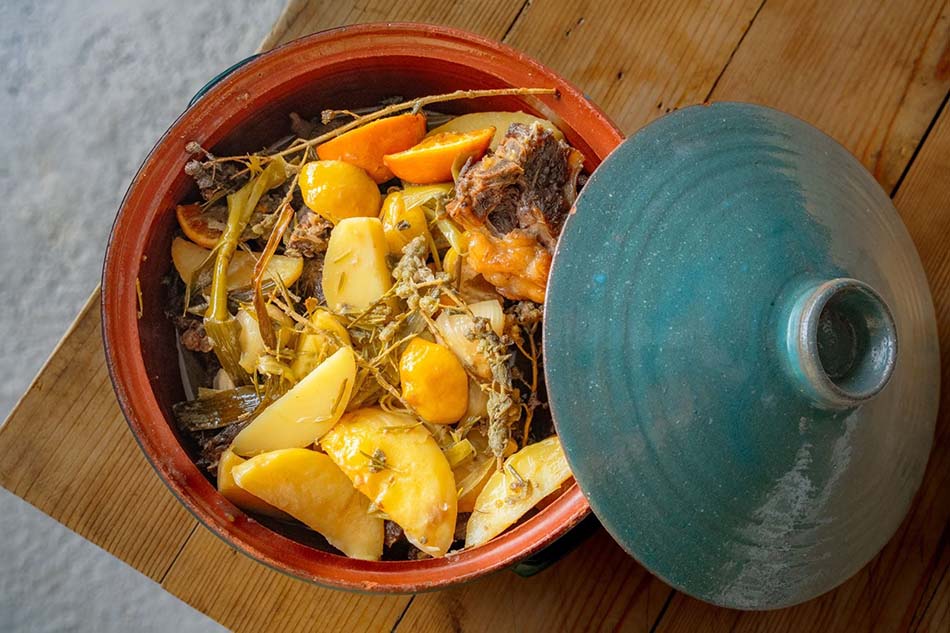
Traditional Greek Roasted Goat in a Clay Pot
At Odyssey, our connection to the land and its rhythms extends deeply into our kitchen. While our chickens roam freely, safe from the pot, there's another meat that holds a revered place in our culinary traditions: goat.
Hearty, flavorful, and deeply rooted in Mediterranean cooking, goat meat is a staple, especially for festive gatherings or a satisfying Sunday meal. And for us, there's only one way to truly honor its rich character: by cooking it slowly, patiently, in the timeless embrace of a clay pot.
The clay pot, known here as a γάστρα or πήλινο σκεύος, is more than just a vessel; it's a culinary philosophy. Its porous nature allows it to absorb and gently release moisture, creating an incredibly humid, even cooking environment. This is paramount when working with goat meat, which can be lean.
The clay pot ensures that every fiber becomes incredibly tender, falling off the bone with the slightest nudge, while remaining beautifully succulent. There's no harsh, dry heat here, only a gentle, even warmth that coaxes out the deepest flavors, locking in all the aromatic juices that might otherwise evaporate. It’s a method that speaks of ancient wisdom, of slow food, and of patience rewarded.
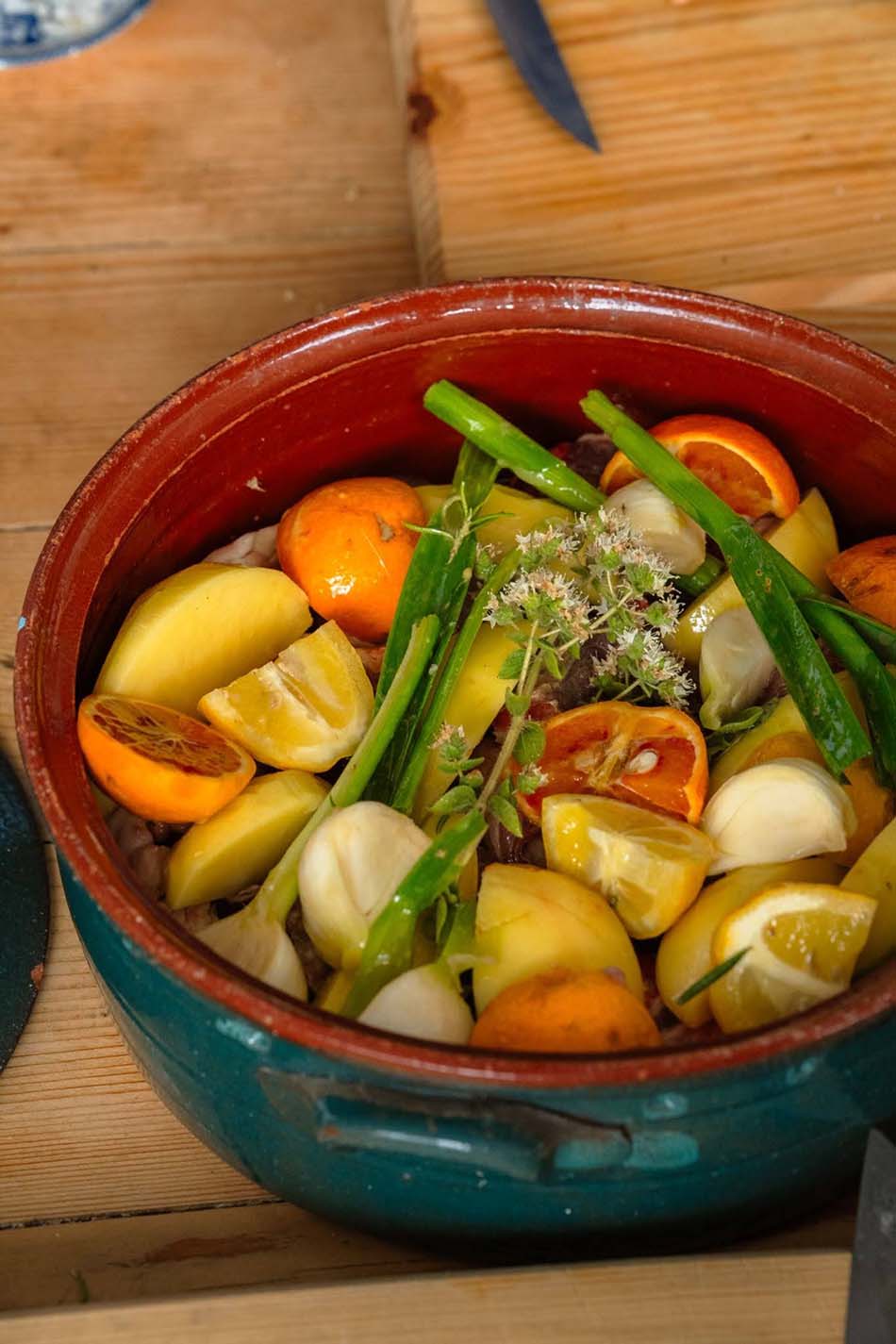
The ritual of preparing the goat in the clay pot is almost as satisfying as the eating itself. We start with succulent cuts of local goat, often marinated simply with olive oil, garlic, wild oregano picked from our hillsides, and a touch of local red wine. Alongside, we layer sturdy vegetables – potatoes, onions, maybe some carrots or robust bell peppers – all coated in the same fragrant marinade, ready to absorb the meat’s essence. Everything is nestled snugly into the clay pot, sealed with its heavy lid, and then slowly cooked in our wood-fired oven, or sometimes just a low, steady oven indoors, for hours on end.
This very tradition of slow-cooked goat recently found an unexpected stage. I was asked to cook 'To Gidi' – our signature goat dish – for the running road competition in Methana. It was a thrilling challenge: how to adapt a dish usually served as the hearty centerpiece of a family meal into something suitable for athletes and spectators on the move? The answer was to transform it into finger food.
We carefully shredded the incredibly tender meat, mixed it with some of the rich, savory sauce, and served it in small, easily manageable portions. The response was overwhelming; it was a great success! People were delighted by the rich, comforting flavors, a warm taste of home amidst the energetic atmosphere of the competition. It was a wonderful testament to how a truly traditional dish, prepared with care in a clay pot, can transcend its usual setting and still bring joy and nourishment to a bustling, modern event.
As the hours pass, the farmhouse fills with an aroma that is utterly intoxicating – a deep, earthy scent, mingling with the herbaceous notes of oregano and the sweet promise of caramelized vegetables. It’s a smell that evokes comfort, tradition, and the warmth of home. When the lid is finally lifted, a cloud of fragrant steam rises, revealing a masterpiece: the goat meat, glistening and impossibly tender, bathed in a rich, savory gravy, with the vegetables softened to perfection.
Each mouthful is a testament to the clay pot's magic – a profound depth of flavor that is truly unparalleled. It’s a dish that embodies our connection to the land, a centerpiece for joyful gatherings, a celebration of family, and a taste of Greece that is as authentic as the very soil beneath our feet.
Cooking goat in a traditional clay pot (γάστρα - gastronomy) is a time-honored Greek method. It creates an incredibly tender and succulent result, as the clay pot traps moisture and allows for very even, slow cooking.
Here's the Traditional Greek Roasted Goat recipe, adapted for cooking in a clay pot, incorporating the mustard, orange, and potatoes.
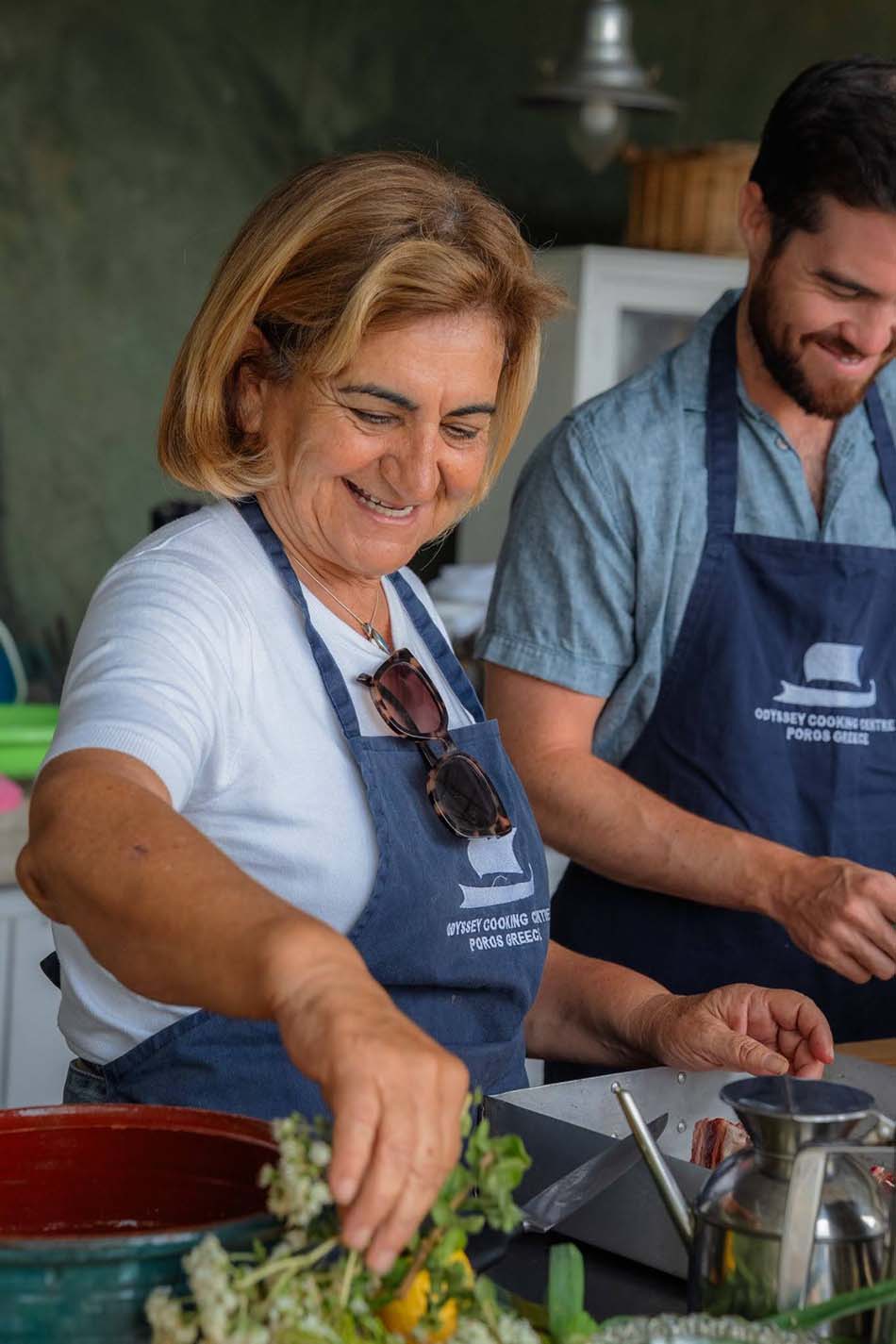
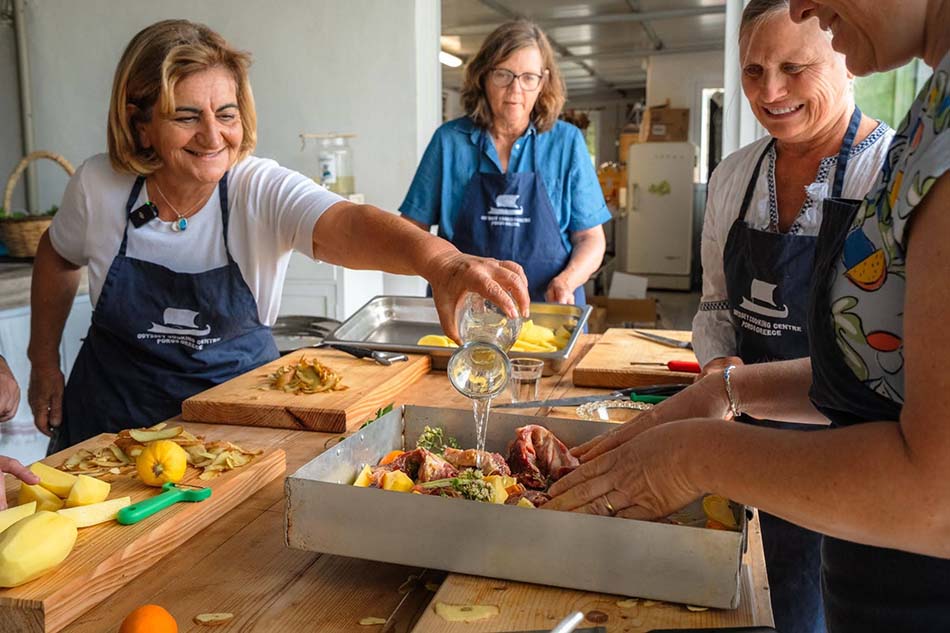
Do you want to cook with Katerina at Odyssey?
Click here for more information!
Ingredients
Instructions
Preparing the goat
1. First, pat the goat dry with kitchen paper. Using a sharp knife, make a few small incisions in the meat. These will help the garlic and herbs release their flavour as the goat cooks.
2. In a bowl, mix the lemon juice, orange juice, mustard, garlic, rosemary, oregano, olive oil, salt and pepper. Stir everything together until you have a fragrant marinade.
3. Rub the mixture all over the goat, making sure to work it into the incisions. Cover and refrigerate for at least four hours, preferably overnight. This gives the meat time to absorb all those wonderful flavours.
4. Before cooking, take the meat out of the refrigerator and allow it to lose some of its chill. Keep food safety in mind, and do not leave it at room temperature for longer than two hours.
Preparing the clay pot
1. Peel the potatoes and cut them into generous chunks. Place them in a bowl and toss with a little olive oil, salt, pepper and some extra oregano.
2. Arrange the marinated goat in your clay pot and place the potatoes around it. Pour the water or white wine into the bottom of the pot, using the liquid to help create a moist cooking environment.
3. Put the lid on.
4. If you are using an unglazed clay pot, check the manufacturer's instructions about soaking and oven use. Some pots need soaking, while others do not. Most importantly, follow the manufacturer's guidance on whether the pot can go into a cold oven or a preheated one.
Slow cooking makes all the difference
1. Place the covered pot in the oven according to the manufacturer's instructions and cook at 160°C (325°F).
2. Allow approximately 3½–5 hours, depending on the size and cut of the goat and the type of clay pot you are using. Check the meat after about three and a half hours. It should be very tender and come away from the bone easily.
3. If you would like a more golden finish, remove the lid towards the end of cooking and increase the temperature to 180°C (350°F) for the final 20–30 minutes. Keep an eye on the potatoes and meat so they brown without drying out.
4. When everything is ready, remove the pot carefully from the oven. Let the meat rest for 15–20 minutes before serving. Remember that a hot clay pot must be placed on a suitable heatproof surface.
Time to bring everyone to the table!
1. Serve the goat directly from the clay pot, surrounded by the soft, flavourful potatoes and all those wonderful cooking juices.
2. I like to serve it with a traditional Greek salad (χωριάτικη σαλάτα), some fresh bread and extra lemon wedges. A little tzatziki on the side is also lovely.
3. And do not forget the sauce at the bottom of the pot. It would be a shame to leave any of it behind!
A few tips from our kitchen
Choose bone-in meat. The bones contribute flavour and make a wonderful centrepiece for the table.
Do not rush the cooking. Goat becomes wonderfully tender when cooked slowly. If it is still firm, give it more time rather than increasing the temperature too quickly.
Use good olive oil. It is an important part of Greek cooking and helps bring the citrus, garlic and herbs together.
Be careful with clay pots. Sudden temperature changes can cause some pots to crack. Always follow the instructions for your particular pot and avoid placing a hot pot on a cold surface.
Make it your own. You can adjust the herbs to suit your taste, add a little more lemon or orange, or include onions alongside the potatoes.
For me, the best part of preparing a dish like this is not only the food itself. It is the time spent getting everything ready, the wonderful smell coming from the oven and, finally, seeing everyone gather around the table.
That is what Greek cooking is all about: good ingredients, simple traditions and food made to be shared.
Καλή όρεξη! Enjoy your meal!
Servings: 6–8 people
Preparation time: 30 minutes
Marinating time: 4 hours or overnight
Cooking time: Approximately 3½–5 hours
Recipe Type: Medium
0 Reviews Found
Leave us your review
Katerina's Kouzina recipes